





Air
Microil
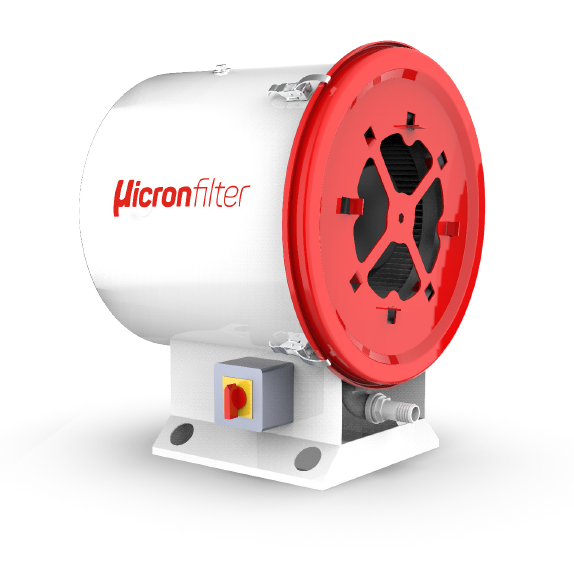
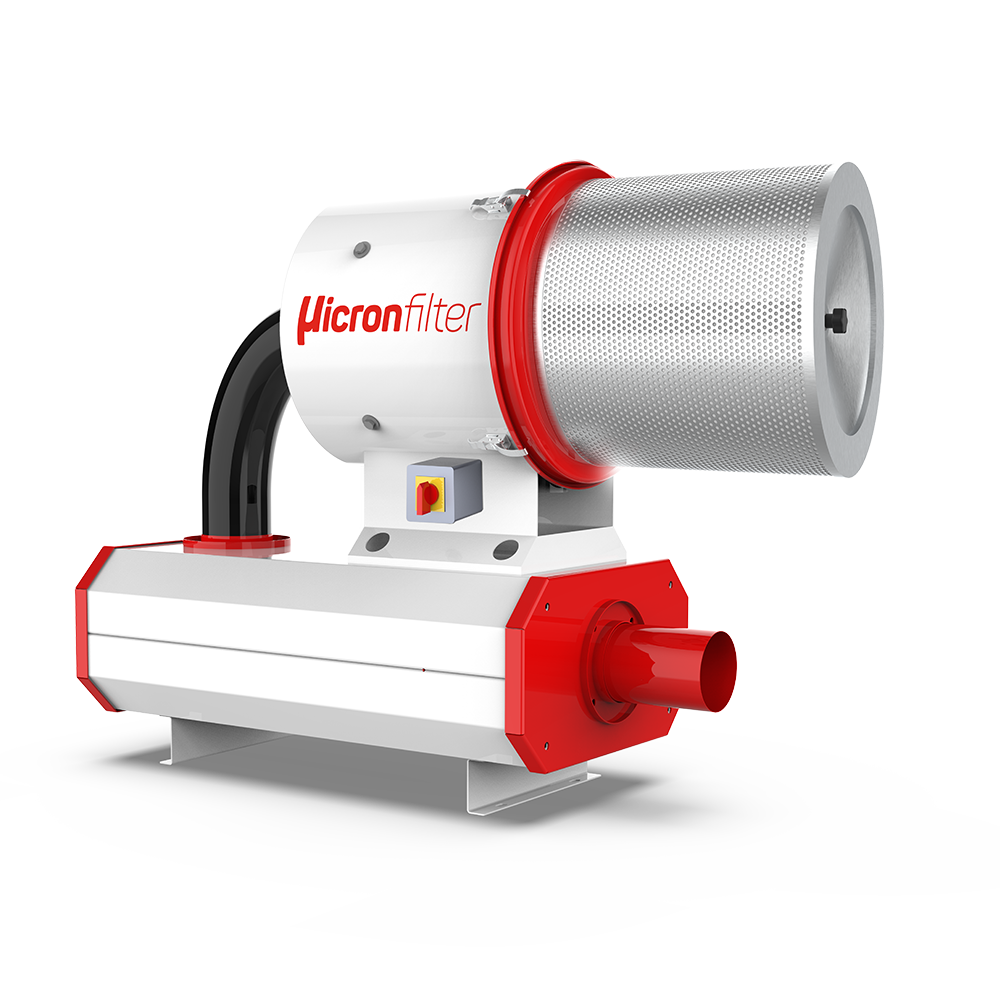
The Microil extractoroffers highly effective filtration for oil mists generated by emulsified cooling lubricants and whole oils on any machine tool. Available in 7 models with impellers and motors of different power ratings, it handles flows from 600 to 3000 m³/h, adapting perfectly to the different sizes and working processes of machine tools. Compact and powerful, Microil is the ideal solution for those seeking reliability and high performance in contaminated air filtration. Its versatility makes it suitable for various industrial environments, ensuring a cleaner and safer working atmosphere and contributing to the overall efficiency of the production process.
Microil Highlighted
-

 Oily mist removal
 -
 Compact and powerful design
 -
 Clean air recycling
Microil Working Principle
- Oily mist inlet
- Backward curved blade fan
- Coalescence prefilter
- Cellulose filter cartridge
- Recondensed oil drainage
- Start/stop switch
- Clean air expulsion

The polluted air is sucked in thanks to the depression exerted by the backward curved blade rotor, which aggregates the micro-particles of oil into larger sizes, recovering them through the drainage pipe.
Subsequently, the air passes through a regenerable coalescing prefilter and a cellulose cartridge, ensuring high pollutant removal efficiency.
Advantages Microil
- Range of 7 models with flow rates from 600 to 3000 m³/h
- Vibration reduction thanks to the reverse blade impeller
- Space-saving solution suitable for various industrial applications

- Configuration flexibility for different machining needs
- Impellers and motors of different power to adapt to all machine tools
- Ease of installation and customization

Microil
Pre Filtration
Pre-filter for chips and dust, complete with: acrylic filter, flat metal filter and labyrinth metal filter.

Microil
Post Filtration
Post-filter for oil mists and fumes, complete with HEPA class filter cartridge.
Supplementary products and accessories
Supplementary products and accessories

Pressure switch
Differential pressure switch 0-100 mm.

Floor stand
Column stand 2000 mm.

Installation kit
Installation kit on board the machine including flexible suction hose, flanged sleeves, drainage pipe and hose clamps.